Parametric Configurator – On-Demand Calculations
A parametric model in a B2B platform—quick quoting and a complete set of technical documentation from a single calculation. Two examples of industrial implementations.
Table of Contents:
- How Parametric Configuration Works
- Complete result from a single calculation
- Implementation example: technical brushes with production documentation (CST)
- Implementation example: air handling units on a B2B portal (VBW)
- How to Safely Launch a New Configurator Project
- Frequently Asked Questions (FAQ)
Wycena złożonego produktu musi uwzględniać specyfikę wyrobu i warunków klienta. Jednym z najskuteczniejszych narzędzi w takich sytuacjach są systemy CPQ z konfiguratorem ofert. Produkty przemysłowe nawet w jednej branży mogą mieć zupełnie inną logikę tworzenia – a to wymaga dobrania właściwego modelu do jego odwzorowania.
W poprzednich artykułach opisaliśmy trzy modele konfiguracji CPQ, a także szczegółowo model komponentowy. W tym materiale rozwijamy zalety i tworzenie konfiguratorów parametrycznych – dla produktów wymagających obliczeń.
How Parametric Configuration Works
Konfiguracja parametryczna to tworzenie produktu przez przeliczenie wartości wejściowych – wymiarów, wydajności, warunków pracy – na gotowe rozwiązanie. W takiej konfiguracji praca zaczyna się od cech zadanych przez klienta.
The user enters the parameters, and the system uses them to calculate the remaining values— dimensions, weight, component selection, and often also the price and documentation. The product is generated as a result of these calculations, and its visualization—even in the form of a 3D model—is updated in real time with every change to the parameters.
A key feature here is the chain reaction: a change in one value triggers a recalculation of the others.
Inne ciśnienie robocze oznacza inne wymiary, te z kolei inną masę, dobór materiału i ostateczny koszt. Dobrze opisany konfigurator do wyceny pilnuje, by każdy wynik mieścił się w dopuszczalnych zakresach inżynierskich i prowadził do produktu wykonalnego.
Model parametryczny sprawdza się przy produktach, których kształt, wymiary i wyposażenie wynikają z formuł i zależności technicznych. Przykładami są zbiorniki i wymienniki ciepła, konstrukcje stalowe na wymiar, centrale wentylacyjne, dźwignice, przenośniki czy maszyny dobierane pod żądaną wydajność.
The three main functions of the parametric configurator:
- Feasibility validation —the system checks whether the specified parameters are consistent with the actual ability to manufacture the product.
- Calculation of output characteristics and visualization —based on the input parameters, the system generates dimensions, weight, material selection, and price, as well as a technical drawing or 3D model (optional) that is displayed in real time.
- Automated documentation —drawings, manufacturing files, and specifications are generated from the same calculation.
One calculation—complete documentation
In the parametric model, a quote is created by entering requirements. The consultant specifies the project’s boundary conditions, and the system automatically selects the rest and immediately shows whether such a product can be manufactured.
Wycena przestaje być żmudnym przeliczaniem, jest gotowa w kilka minut. Praca staje się szybsza, prostsza i bardziej przewidywalna.
Im bardziej złożone obliczenia, tym wyraźniej widać tę przewagę. Tam, gdzie ręczny dobór zająłby inżynierowi godziny, dobrze opisana logika parametryczna podaje wynik od razu – i powtarza go bezbłędnie przy każdej zmianie założeń.
Z obliczeń, które definiują produkt, system generuje rysunki, specyfikacje materiałowe i dane do produkcji. Oferta i dokumentacja techniczna pochodzą z jednego źródła, więc nie ma rozbieżności między tym, co obiecano klientowi, a tym, co trafia na halę.
Produkty o standaryzowanej konstrukcji, lecz zmiennych gabarytach i parametrach – od elementów docinanych pod wymiar, przez komponenty z włókien technicznych i tworzyw, po detale obrabiane maszynowo – najlepiej konfigurować w logice parametrycznej. Ich geometrię i specyfikację wyznaczają wartości podane przez klienta, a nie wybór z gotowego katalogu. Im dokładniej opisane są zależności między tymi wartościami, tym szybciej z parametrów powstaje kompletny, wykonalny wyrób wraz z dokumentacją.

Technical brushes and ventilation units are good examples of such a product group. The EXSO team implemented both of these projects.
Implementation example: technical brushes with production documentation (CST)
Konfigurator zbudowany przez EXSO dla firmy Czystość–Szczotki Techniczne Krotoszyn obsługuje pełny zakres cech technicznych szczotki –
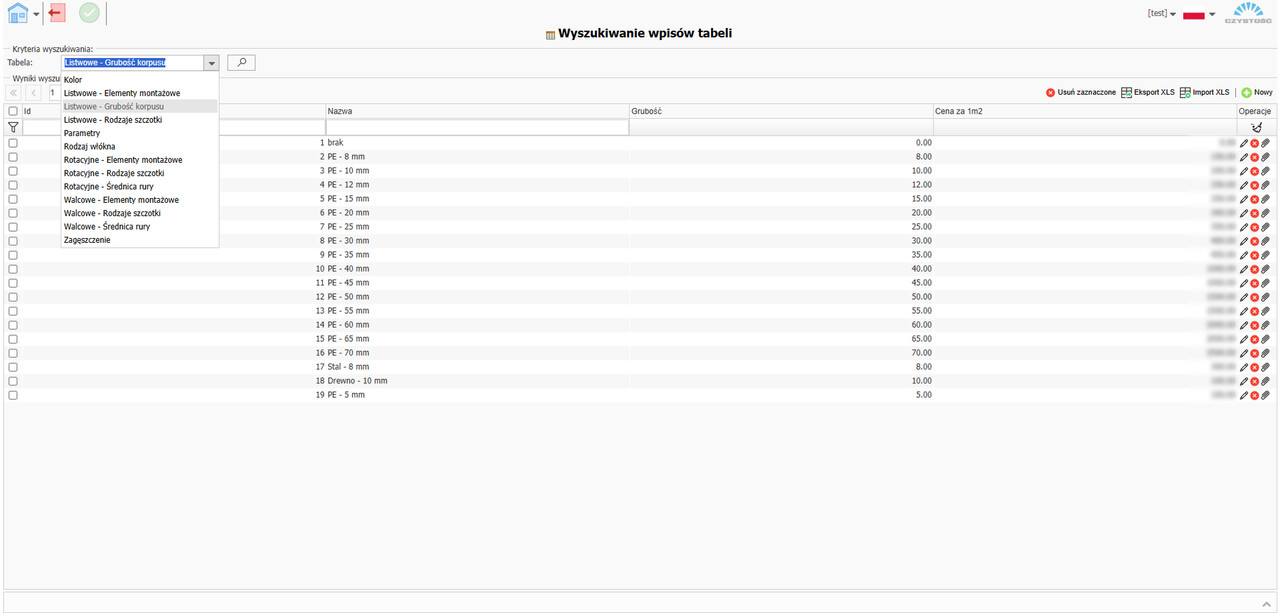
- structural factors (number of columns and rows, spacing and depth of holes, angle of rotation)
- by the characteristics of the body (type and diameters, shape of the reduction),
- based on the bristle specifications (fiber type and color, length, density, number of bundles).
System CST na podstawie tych wartości wycenia gotowy produkt oraz automatycznie weryfikuje wykonalność technologiczną. Wszystkie parametry wchodzą w jeden proces przeliczenia, którego wynikiem jest kompletna oferta z dokumentacją produkcyjną – ofertą, modelem 3D i danymi wytwórczymi.
Produkty ze skomplikowanymi obliczeniami ofertowymi i specyfiką zastosowania często wymagają wizualizacji – zarówno dla handlowców, jak i klientów. Ręczne tworzenie takich wizualizacji jest bardzo pracochłonne, a automatyczne generowanie w podstawowych narzędziach potrafi obciążać zasoby komputera na tyle, by znacząco spowolnić pracę zespołu.
Określone parametry pozwalają natychmiast wygenerować model 3D szczotki, a wraz z nim rysunek techniczny w formacie DXF z rozmieszczeniem otworów – ten sam plik trafia później do maszyny i steruje produkcją.

Dokumentacja produktu z nawet 10 tysiącami włókien powstaje w systemie w kilka sekund.
Przeczytaj case study o realizacji systemu dla firmy CST →
Implementation example: air handling units on a B2B portal (VBW)
Designing an air handling unit requires well-defined formulas and relationships as early as the configurator development stage, as well as the ability to update rules when standards or technology change. This ensures that whenever a change is made, only the input data needs to be adjusted—the system automatically recalculates the result.
Przy dziesiątkach parametrów każdy błąd, nawet o jeden procent w danych wejściowych, znacząco zmienia wynik projektu – zwiększa koszt centrali lub blokuje jej wykonanie. Konfigurator parametryczny eliminuje takie ryzyko: waliduje dane, przelicza zależności termodynamiczne i podaje wynik z dopuszczalnych zakresów inżynierskich.
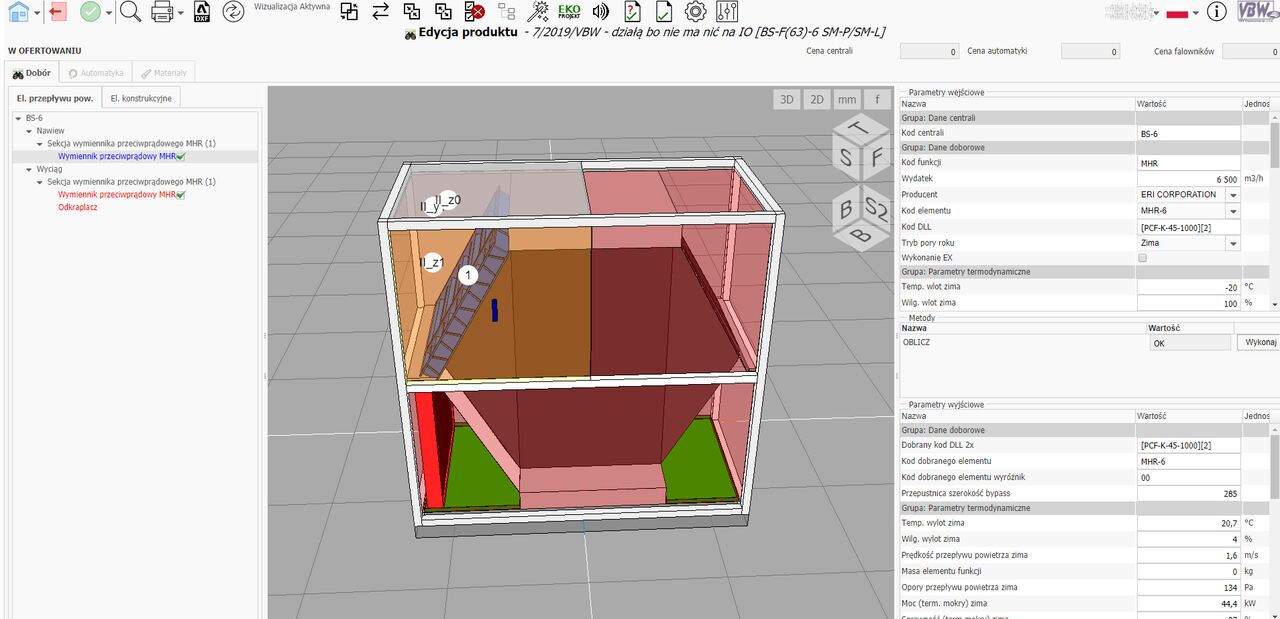
Platforma B2B VBW rozszerza tę logikę na całą sieć sprzedaży. Partnerzy handlowi VBW pracują w tym samym systemie co producent – konfigurują centralę na podstawie parametrów klienta (temperatury, wilgotności, wydatku) i otrzymują od razu geometrię, dobór komponentów (filtry, wentylatory, wymienniki) oraz cenę.
According to the VBW team, the implementation significantly reduced the time needed to prepare bids and had an impact on industry standards.
Szybkie przeliczenie danych na geometrię i masę centrali.
Szczegóły realizacji w case study platformy VBW →
How to Safely Launch a New Configurator Project
Implementing a parametric configurator is a strategic investment—it affects the sales cycle, team work standards, and the company’s market position. That’s why choosing a vendor should be treated as a decision about a long-term partner, not a one-time technical contractor.
Three things to consider before making a decision:
- Engineering experience – has the supplier’s team already developed configurators for products with a similar level of technical complexity?
- Completeness of the result —does a single calculation generate a quote, technical documentation, and production data, without the need for manual entry?
- Development autonomy —can the manufacturer’s engineers add and modify rules without programming when standards or technology change?
Warto zacząć od analizy logiki produktu z dostawcą – jeszcze przed podpisaniem umowy. To pokazuje, jak dostawca myśli o wyrobie i czy trafnie rozpoznaje jego mechanikę. Rzetelna analiza na starcie skraca cykl wdrożenia i eliminuje kosztowne poprawki po uruchomieniu systemu.
Subsequent system implementation processes take place in several stages:
- Product Logic Mapping – The implementation team, together with the manufacturer’s engineers, recreates the process by which the product is created from input values: formulas, dependencies, tolerance ranges, and exceptions.
- Designing rules and calculations —describing technical relationships within the system, defining input and output parameters, and validating feasibility.
- Data migration – transferring component catalogs, price lists, technical documentation, and historical quotes to a single environment.
- Testing and validation —comparing the configurator’s results with actual quotes from recent years, adjusting rules, and verifying production documentation.
- Team launch and training —deployment in a production environment; training for sales representatives, engineers, and sales channel partners.
Sprawdź, jak konfigurator parametryczny może usprawnić ofertowanie w Twojej firmie → Umów rozmowę
About EXSO
Zespół technologiczny EXSO (Expert Solutions) od ponad 17 lat tworzy cyfrowe platformy sprzedaży z konfiguratorem dla dużych i średnich producentów złożonych urządzeń przemysłowych – od maszyn rolniczych po konstrukcje stalowe. Rozwiązania są dopasowane do sposobu, w jaki firma buduje swoje produkty. Wspierają one procesy operacyjne producenta, w tym sprzedaż przez dealerów, kolejne kanały i rynki zagraniczne.
Frequently Asked Questions
What are sales platforms with a configurator?
Sales platforms with configurators are business applications designed to support the sale of complex industrial products. At their core are CPQ (Configure, Price, Quote) systems, which streamline the entire quoting process—from feature selection and pricing to documentation.
Handlowiec, dealer lub dystrybutor pracują w jednym środowisku online, w którym system prowadzi przez dozwolone warianty i generuje spójną ofertę zgodną z możliwościami produkcyjnymi wytwórcy.
How does a parametric configurator differ from a component-based one?
A parametric configurator generates a quote based on input values using formulas. It works well for tanks, air handling units, custom-made steel structures, and industrial brushes.
Konfigurator komponentowy dobiera moduły z katalogu na podstawie zdefiniowanych reguł kompatybilności. Znajduje zastosowanie przy produkcji maszyn, przyczep czy zabudów pojazdów, gdzie oferta powstaje z dozwolonych zestawień podzespołów.
Gdy specyfikacja produktu wymaga połączenia doboru części z obliczeniami inżynierskimi, właściwym rozwiązaniem staje się model hybrydowy.
How does a parametric configurator support sales digitization at a manufacturer?
The parametric configurator moves the quoting process from spreadsheets and manual engineering calculations to a single online environment. Input values are converted into a finished quote, technical documentation, and production data—without having to repeat the work in multiple systems.
Dla producenta oznacza to skrócenie cyklu sprzedaży, standaryzację ofert w całej sieci handlowej oraz spójność między działem sprzedaży, inżynierią i produkcją. Konfigurator staje się źródłem prawdy o produkcie – handlowiec, dealer i dział techniczny pracują na tych samych regułach i tej samej wersji danych według odpowiednich uprawnień.
Czy konfigurator parametryczny może zasilać maszyny produkcyjne?
Tak. Konfigurator parametryczny generuje pliki, które trafiają bezpośrednio na halę – DXF do maszyn CNC, specyfikacje materiałowe, dane do sterowania produkcją. Wszystko z tego samego przeliczenia, które tworzy ofertę dla klienta.
Dzięki temu znika ryzyko rozbieżności między dokumentacją handlową a technologią – oferta i produkcja pracują na tej samej wersji danych. Wizualizacja 3D, która jest opcjonalną funkcjonalnością, generuje się po wprowadzeniu parametrów. Pomaga handlowcowi oraz klientowi zobaczyć produkt przed zamówieniem, a później wysłać informację na halę produkcyjną z większą pewnością.
What does the implementation of a parametric configurator look like?
Implementation takes place in several stages: analysis of the product’s logic, design of rules and calculations, migration of catalogs and documentation, validation testing, and launch with team training. The implementation time depends on the complexity of the calculations, the readiness of the technical documentation, and the involvement of the manufacturer’s engineers. Each project is unique—a detailed schedule is developed after analyzing the product logic.